
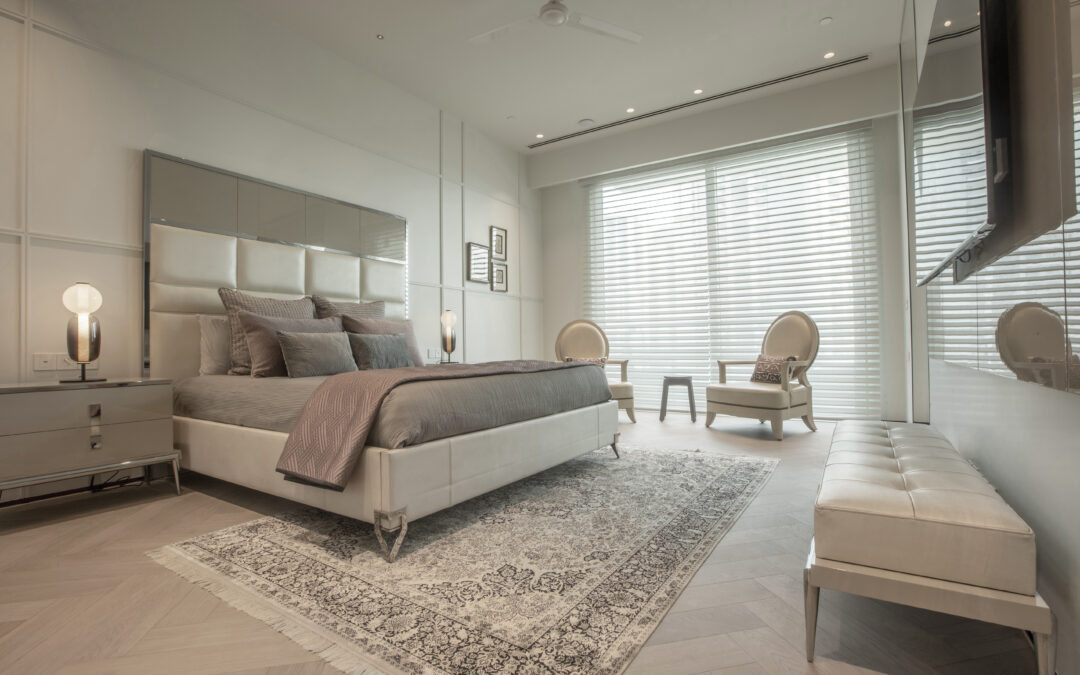
If you are considering engineered wood flooring for your home, one of the first questions you will ask is:
“How much does engineered wood flooring cost in India?”
The answer depends on several factors including the wood species, plank size, construction, finish, format, installation method, and site conditions.
In this guide, we explain everything that affects engineered wood flooring prices in India, the hidden costs homeowners often overlook, and how to budget correctly for your project.
What Is Engineered Wood Flooring?
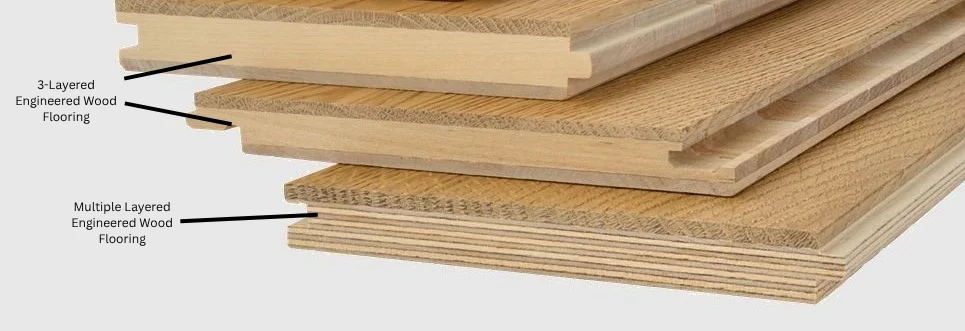
Engineered wood flooring consists of a layer of real hardwood bonded to multiple layers of plywood or other stable core materials. This construction makes it more dimensionally stable than solid wood flooring and suitable for a wider range of Indian climates and installation conditions.
Unlike laminate or vinyl flooring, engineered wood has a genuine wood surface that is 100% real wood.
Cross-Section of different types of Engineered Wood Flooring!
Engineered Wood Flooring Price Range in India (2026)
The cost of engineered wood flooring in India varies significantly depending on quality and specification.
Budget Segment
Suitable for:
- Apartments
- Rental properties
- Builder-grade projects
Typical features:
- Thin wear layer
- Narrow plank sizes
- Limited finish options
Estimated Price Range: ₹500 to ₹700 per sq. ft. Plus installation, accessories & GST.
Mid-Premium Segment
Suitable for:
- End-user homes
- Villas
- Renovation projects
Typical features:
- Better core construction
- Wider planks
- Higher quality finishes
- Improved durability
Estimated Price Range: ₹700 to ₹1200 per sq. ft. Plus installation, accessories & GST.
Luxury Segment
Suitable for:
- Premium residences
- Designer homes
- Luxury apartments
- Hospitality projects
Typical features:
- European Oak
- Wide planks
- Long board lengths
- Thick wear layers
- Advanced UV finishes
Estimated Price Range: ₹1200 to ₹12000 per sq. ft. Plus installation, accessories & GST.
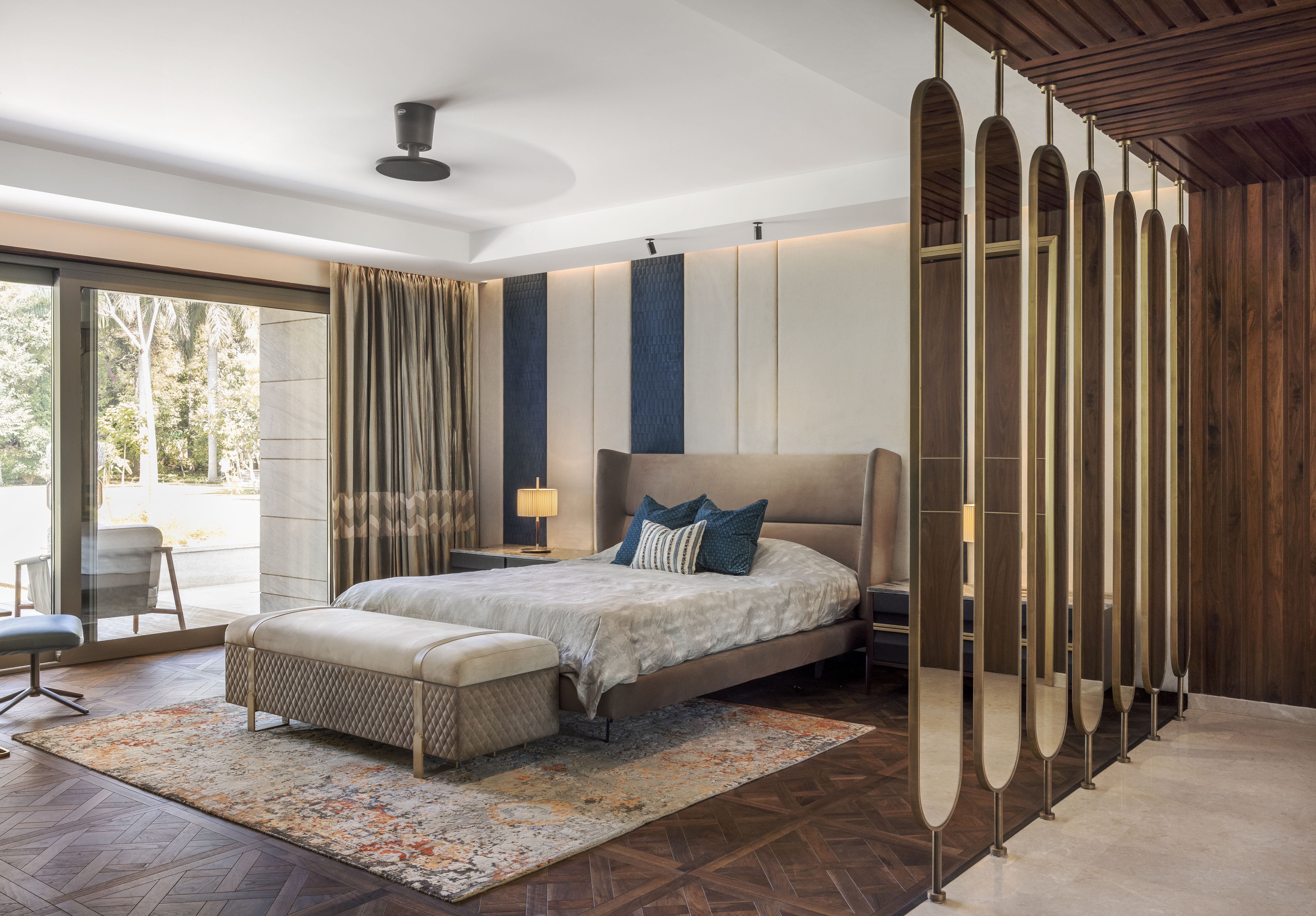
A luxurious living space with Engineered Wooden Flooring!
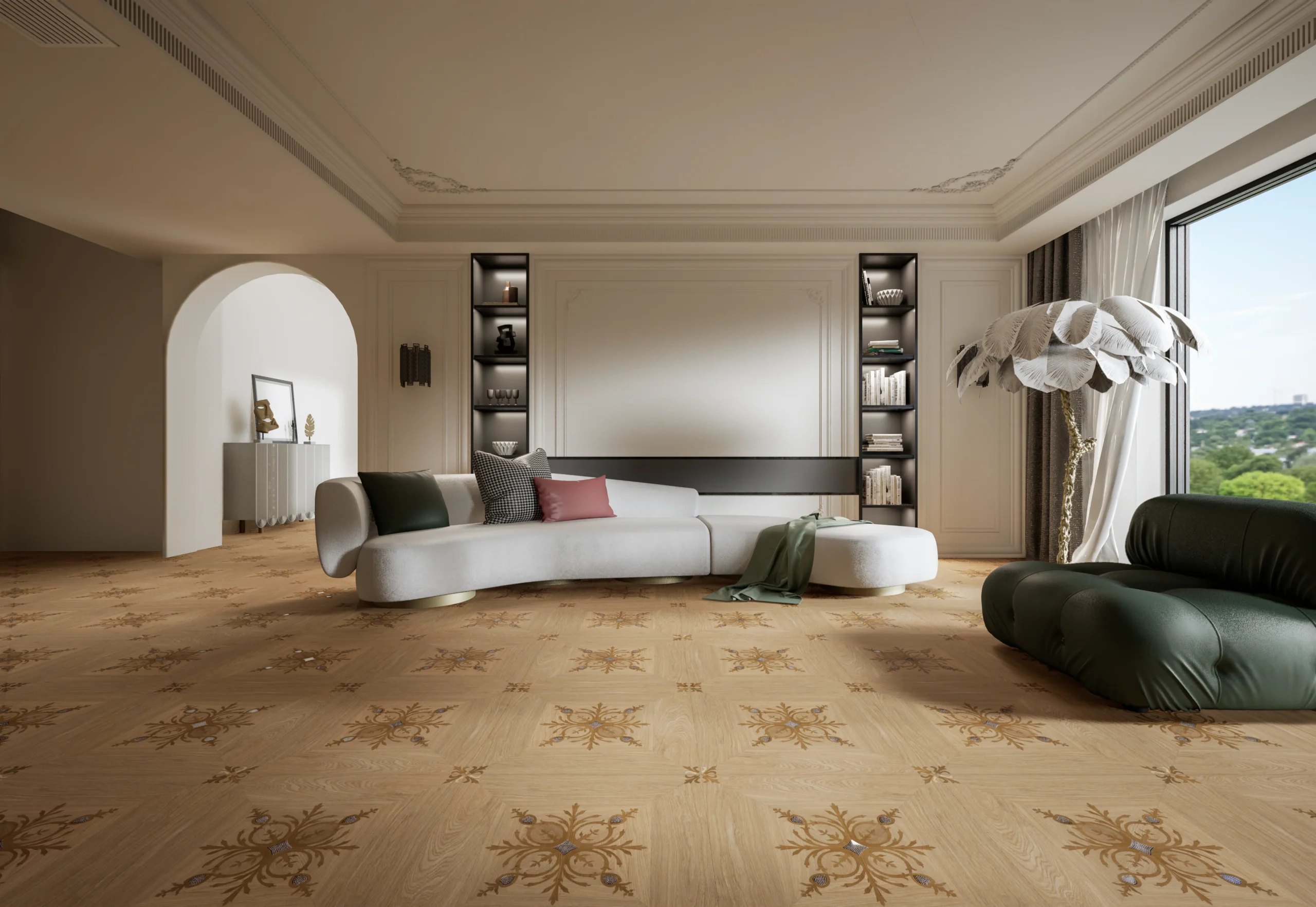
An Engineered Wood Flooring with Inlay!
What Affects the Cost of Engineered Wood Flooring?
Not all wood species cost the same.
Common options include:
- Oak
- Walnut
- Teak
European Oak remains the most popular premium flooring species because of its balance of aesthetics, durability, and design versatility.
Generally:
- Oak = Moderate to Premium
- Walnut & Teak = Premium
- Exotic species = Highest cost
An Oak Engineered Wood Floor!
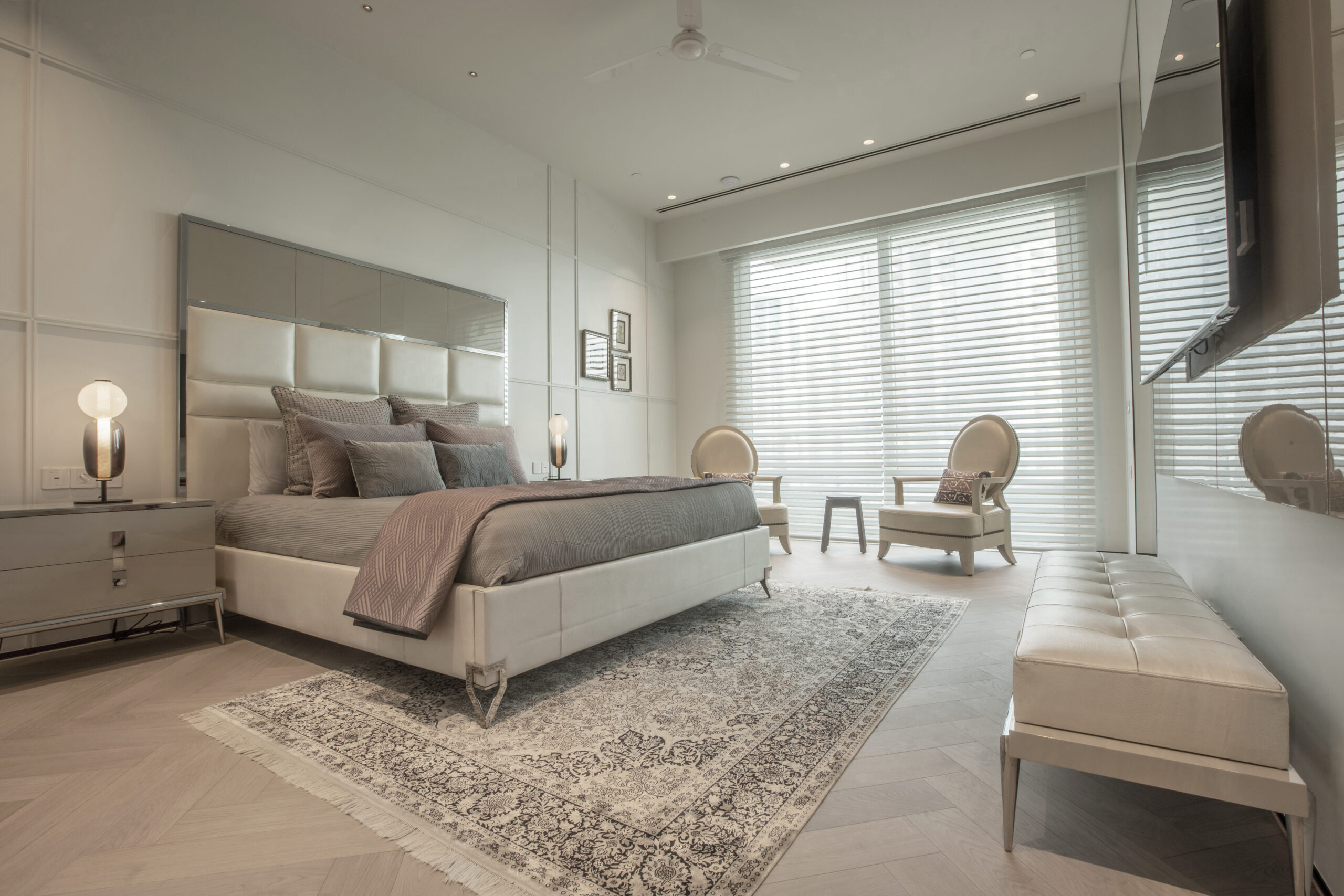
A Walnut Engineered Wood Floor!
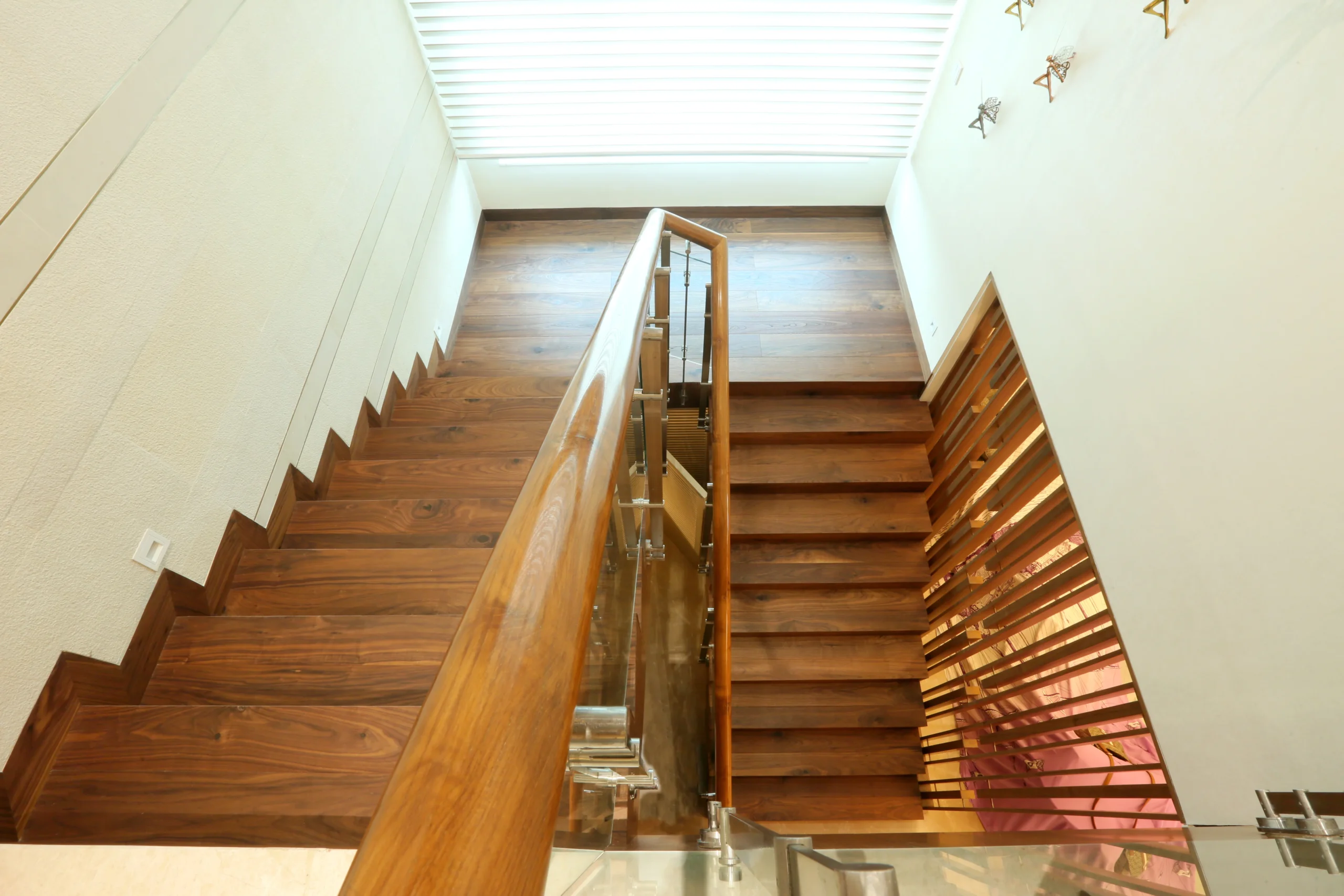
Teak Engineered Wood Floor!
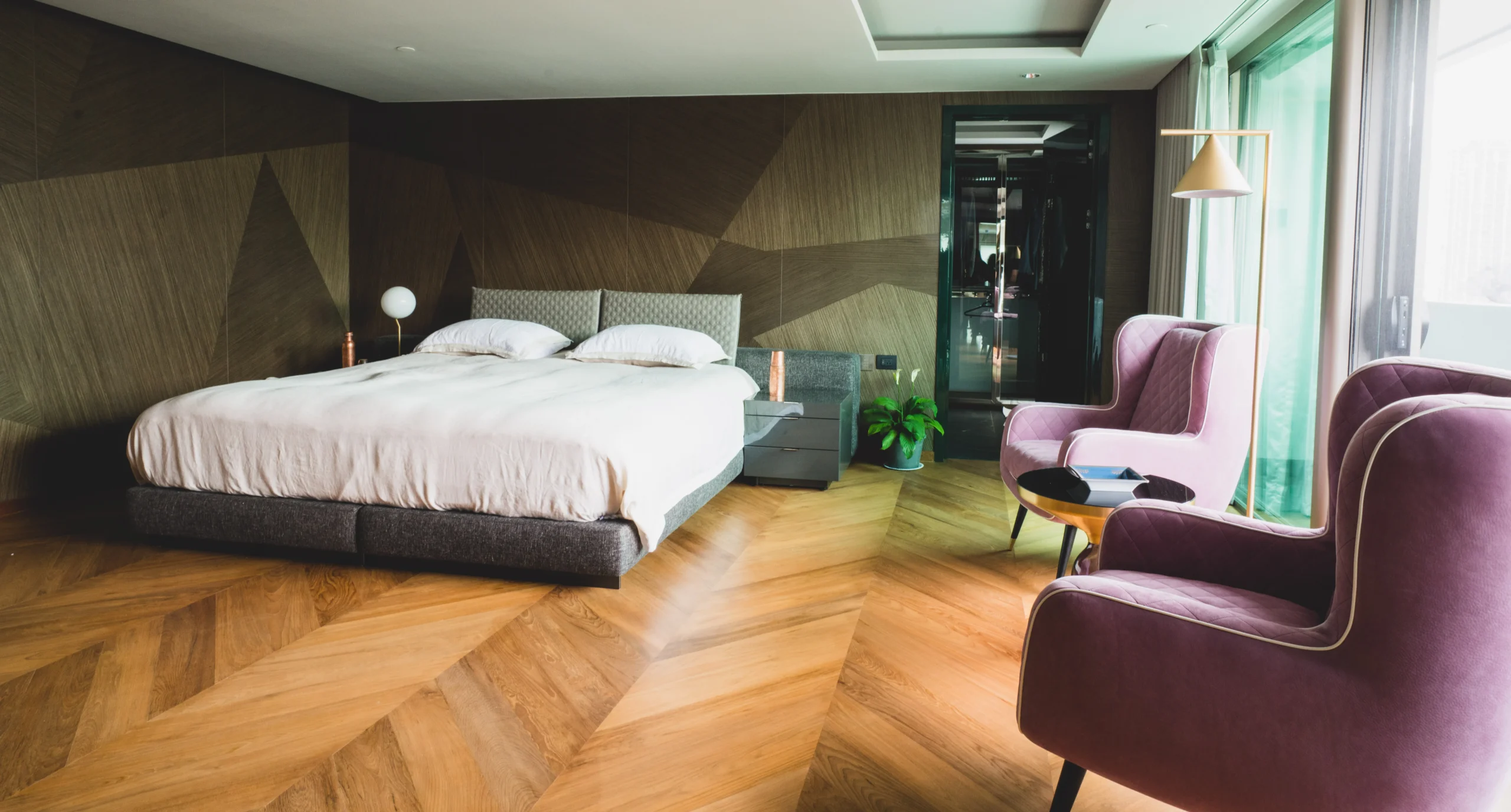
Photo Credit – Champaca ©
The wear layer is the real wood surface on top.
Typical wear layers include:
- 0.6 mm (these floors can not be sanded and refinished)
- 2 mm (These may be sanded once depending on the condition)
- 3 mm (Can be sanded and refinished 1-2 times)
- 4 mm (Can be sanded and refinished 2-3 times)
Thicker wear layers generally increase:
- Longevity
- Refinishing potential (the floor may be sanded back to bare wood and a new color can be put this renewing the floor fully)
- Material cost
The wear layer combined with its grading is often one of the most important indicators of long-term value. By grading is meant the selection of top veneer based on its appearance.
Cross-Section with top wear layer!
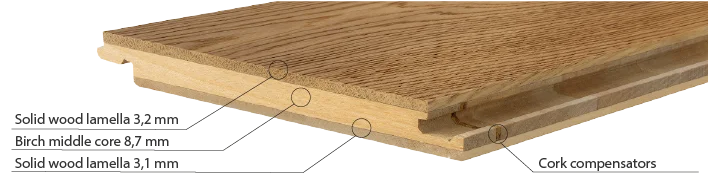
Photo Credit – Coswick ©
Wider planks create a more luxurious appearance but require higher-grade core and more careful manufacturing.
Typical widths:
- 125–150 mm
- 180–190 mm
- 220–250 mm+
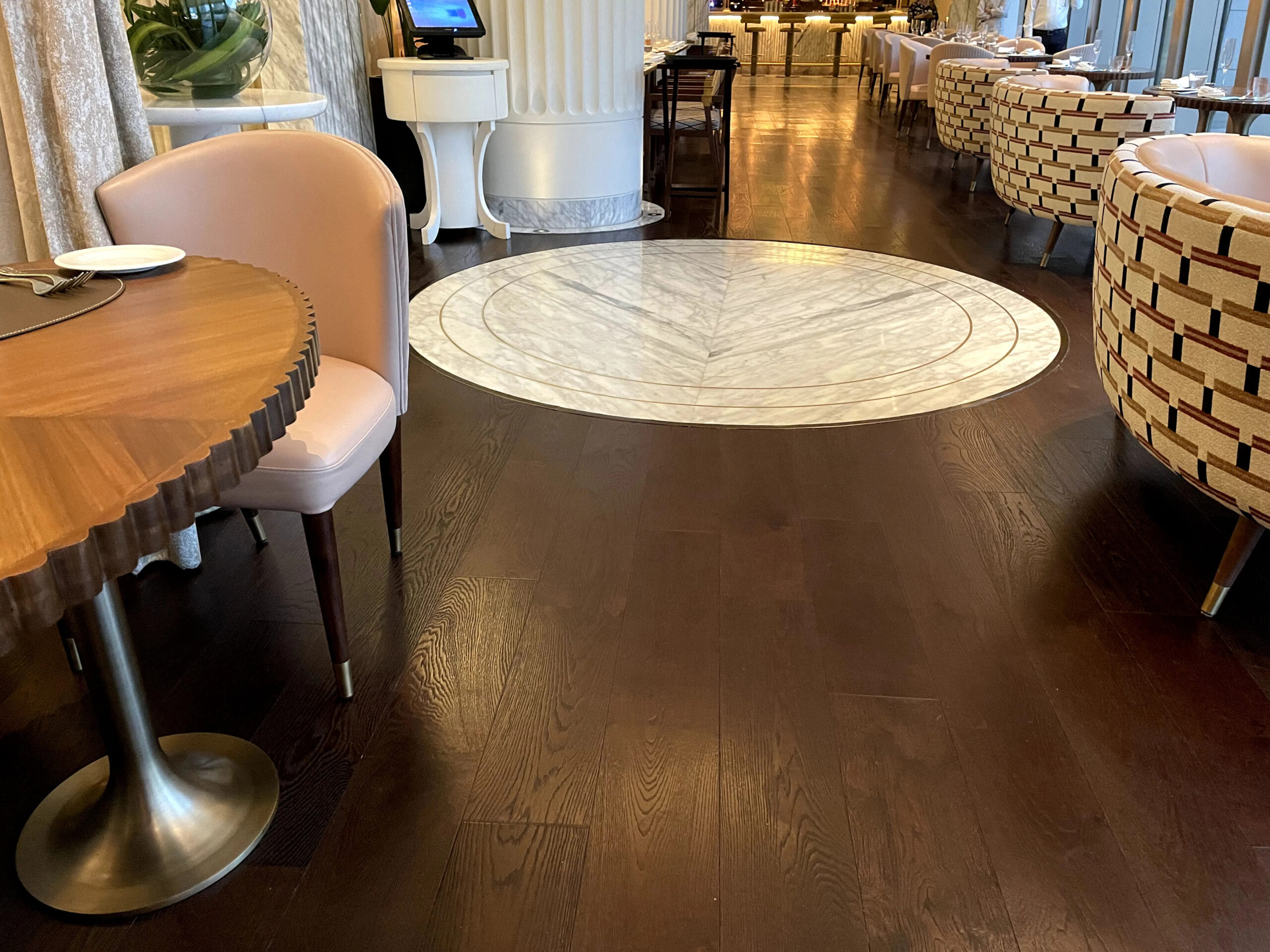
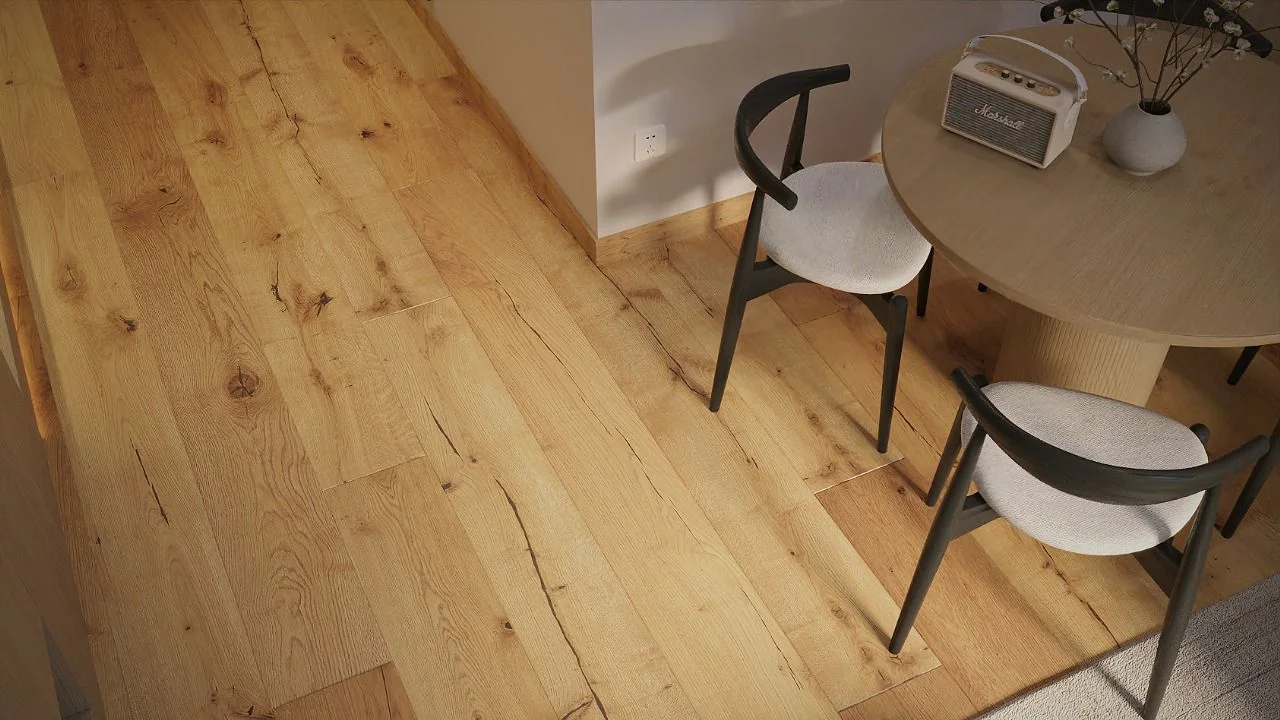
As width increases, costs usually rise as well. Wider planks are among the most requested flooring styles in luxury homes today. Most premium & luxury projects for 190 mm to 300 mm wide planks.
127mm Width Engineered Wood Flooring! Colour-Pastel
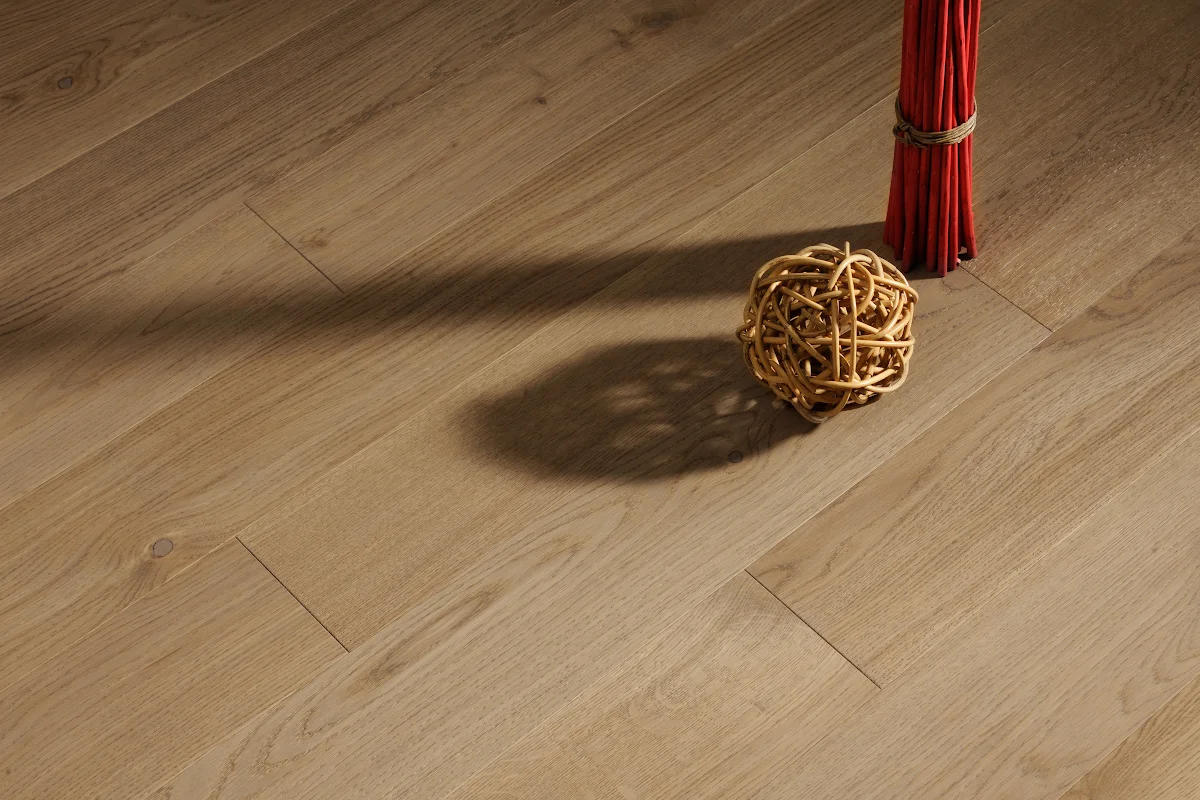
Photo Credit – Coswick ©
190mm Width Engineered Wood Floor! Colour-Coffee
250mm Width Engineered Wood Floor! Colour-French Polish
Longer boards create a more spacious and premium visual effect.
Typical lengths:
- Random (mixed lengths)
- 1200 mm
- 1800 mm
- 2200 mm+
- 2500 mm+
Longer boards generally require better raw material selection and therefore command higher prices. Overall a wider & longer plank reduces the seams and make an area look calmer.
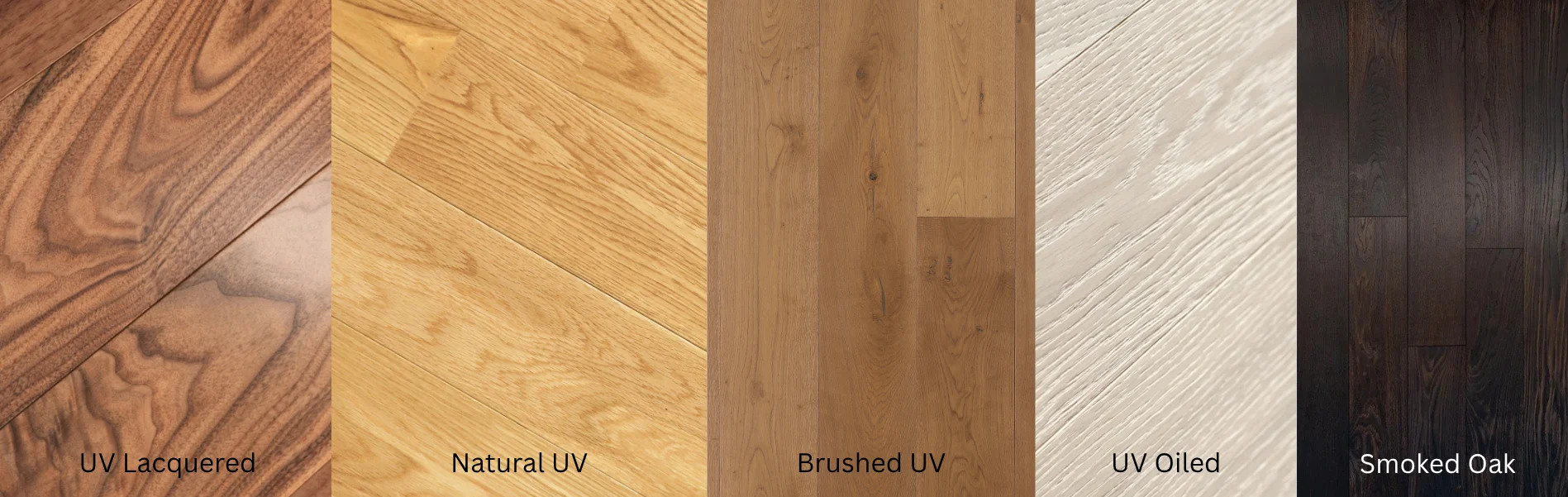
5. Surface Finish
Common finishes include:
- UV Lacquered
- Natural UV
- Brushed UV
- Oiled Finish
- Smoked Finish
Special finishes have an impact on aesthetic & increase manufacturing complexity and cost.
Surface Finishes!
6. Pattern Selection
Installation pattern has a significant impact on project cost.
Straight Plank
Generally the most economical option with least wastage during installation.
Herringbone
Requires more planning, material handling, and installation skill.
Chevron
Typically the most expensive decorative pattern due to precision manufacturing and installation requirements. Decorative patterns often carry a cost premium compared to straight plank installations.
Installation Costs
Many homeowners focus only on flooring material cost and underestimate installation expenses.
Installation costs may include:
- Flooring installation
- Adhesives & Underlays
- Moisture barriers
- Expansion profiles
- Skirting
- Trims
- Site supervision
Industry sources indicate installation and preparation costs can materially affect the final project budget.
Typical Installation Cost: ₹80/- to ₹ 300/- per sq. ft.
Hidden Costs Homeowners Often Miss
Floor Leveling
Engineered wood floors require a reasonably flat substrate.
If the floor is uneven, self-leveling compounds or corrective screed work may be required. Most people go for a commercial tiled substrate these days which is a practical option providing both a nice, flat & dry surface as well as additional waterproofing. In case of renovation projects, in most cases, the existing floors are good enough but this can be confirmed by the flooring installer.
Adhesives & Installation underlays
Premium wood flooring adhesives/special underlays like Elastilon can represent around 10% to 20% of the project cost.
Using cheaper alternatives may compromise long-term performance.
Door Alterations
Existing doors may require trimming after installation. This is generally not a big cost and can be avoided altogether in case of a new construction as the door can be ordered to the exact size provided the flooring selection is done prior.
Furniture Relocation
Large renovation projects may involve additional handling costs while new builds generally get in furniture post wood flooring installation so there are no additional costs.
Is Engineered Wood Flooring Worth the Cost?
For homeowners seeking the appearance and warmth of real wood, engineered flooring offers an excellent balance between aesthetics, performance, and practicality.
Compared to solid wood flooring, engineered wood generally offers:
- Better dimensional stability
- Wider installation flexibility
- Compatibility with concrete subfloors
- Better suitability for varying climatic conditions.
The lowest-priced flooring is rarely the most economical option over the life of the floor. Construction quality, wear layer thickness, installation standards, and after-sales support often have a greater impact on long-term satisfaction than the initial purchase price. Like in everything else, you generally get what you pay for.
Frequently Asked Questions
What is the average cost of engineered wood flooring in India?
Prices vary widely depending on quality, specification, and origin. Most projects fall somewhere between entry-level and luxury pricing tiers. Published market estimates show a broad range across suppliers and product categories but as a thumb rule, take 1100/- per Sft as an average for a quality product and installtion which would give a great result.
Is engineered wood cheaper than solid wood?
Generally yes but not always. Engineered wood in most cases is more affordable while providing similar visual appeal and improved dimensional stability.
How long does engineered wood flooring last?
Quality engineered wood flooring can last for decades when properly installed and maintained. Lifespan depends heavily on wear layer thickness, construction quality, and maintenance.
Is herringbone flooring more expensive?
Yes. Herringbone installations generally require more labour, planning, and material handling than straight plank installations.
What is the biggest mistake homeowners make?
Comparing flooring only on price per square foot without considering wear layer thickness, core construction, installation quality, and warranty support.
Final Thoughts
Engineered wood flooring is not a commodity product. Two floors that look similar in photographs can vary dramatically in performance, lifespan, and overall project cost.
Before making a decision, compare not only the flooring price but also the construction, wear layer thickness, installation system, warranty, and technical support provided by the supplier.
A well-chosen engineered wood floor can add warmth, character, and long-term value to a home for decades.